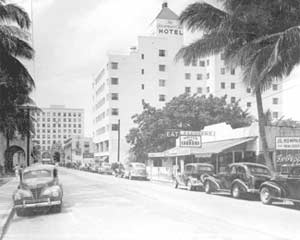
Welcome to the Fort Lauderdale History page. Here you will find information related to the gorgeous white sandy beaches of Fort Lauderdale to it's historic section of town. We hope that you enjoy our History page as much as we do.
The distinction is well deserved. Whatever you want to do during your stay, it's available in abundance.
If you're a beachgoer, we have 23 miles of smooth sand and crashing waves. Settle in with a good book and a bottle of lotion and you won't have a care left in the world.
If you'd rather be on the water, your choices range from entertaining sightseeing cruises on the Intracoastal Waterway to exciting snorkel and dive excursions to hard-fought battles with some of the greatest sport fish in the ocean. With 42,000 resident yachts, 100 marinas and boatyards, and more than 300 miles of inland waterways (giving the city its "Venice of America" nickname), you're never far from a nautical treat. Do your tastes run to shopping? You can find the finest merchandise or the biggest bargains at one of our 12 major shopping malls or countless specialty shops. From exclusive Las Olas boutiques to bustling flea markets, you're certain to find everything you seek.
Looking for a relaxing lunch, a romantic dinner, or a pulsating dance floor? With some 3,500 restaurants and more than 110 nightclubs, you can dine on a distinct cuisine at every meal and enjoy diverse live music every night.
Arts and culture abound, as well. Museums and galleries display marvelous fine art, hands-on science fun, and historical highlights, while performing arts venues offer stellar performances of popular and classical music, dance, theatre, comedy, opera, and everything in between. And don't miss the many outdoor arts festivals, craft shows, and concerts under the stars.
Then there's the area's incredible sports scene. Four professional teams call South Florida home -- baseball's Marlins, the National Football League Dolphins, basketball's Heat, and the Florida Panthers hockey team. Add more than 50 golf courses, tennis, swimming, biking, skating, water-skiing, and much more and you know you've come to a true sports paradise.
Greater Fort Lauderdale's future looks even brighter. With the opening of Beach Place on the ocean; The Las Olas Riverfront and the New World Aquarium; expansion at Port Everglades, North Port Marketplace, and the Fort Lauderdale/Hollywood International Airport; and countless other enhancements, the area gives you more reasons to visit all the time.
Greater Fort Lauderdale extends a hearty greeting today, and looks forward to welcoming you to one of the world's "Great Locations" for years to come.
Welcome to GREATER THAN EVER Fort Lauderdale!
With 23 miles of beaches, 300 miles of inland waterways, 42,000 resident yachts and 100 marinas and boatyards Fort Lauderdale will more than wet your appetite for adventure.
We cordially invite you to sample the many tropical pleasures and hidden treasures to be found in Greater Fort Lauderdale. Long renowned as one of the world's most appealing vacation spots, our area is teeming with more to do than ever before. Day and night, above and under the water, from the sunny Atlantic shores to the unspoiled reaches of the Everglades, you'll always find something to fulfill your vacation fantasies.
For starters, you'll enjoy basking in the sun and frolicking in the waves as you experience our 23 miles of sandy beaches, stretching from Hollywood on the south to Deerfield Beach on the north. As you move inland, you can explore a full 300 miles of palm tree-shaded waterways that are lined with numerous special sightseeing attractions.
Be sure to explore the heart of downtown Fort Lauderdale on trendy Las Olas Boulevard, which serves up an outstanding selection of fine boutiques, eclectic galleries, charming sidewalk cafes, and action-packed nightspots in a chic, ever-changing landscape. It's a people-watchers delight -- morning, noon, or night.
Throughout the region, you can take advantage of our diverse cultural options, natural wonders, festivals and celebrations, world-famous shopping, and award-winning cuisine. From ways to play to places to stay, you'll find everything you need to create a memorable stay in our sun-kissed destination.
Best of all, we keep getting better and better. In 1998, we welcomed a record 6.4 million visitors to our sunny shores. Before the year 2001, nearly $2 billion will be invested in tourist-related infrastructure and facilities in Greater Fort Lauderdale.
For more information and to receive a free copy of our vacation planner, contact the Greater Fort Lauderdale Convention and Visitors Bureau by calling 1-800-22-SUNNY or visit us online at www.sunny.org.
Experience the wonders of Greater Fort Lauderdale. We promise to be here with a warm welcome.
About Fort Lauderdale
City of Fort Lauderdale Overview
Incorporated on March 27, 1911, the City of Fort Lauderdale is situated on the southeast coast of Florida, centrally located between Miami and Palm Beach. Encompassing more than 33 square miles with a population of nearly 190,000, Fort Lauderdale is the largest of Broward County's 30 municipalities and the seventh largest city in Florida. Embraced by the Atlantic Ocean, New River and a myriad of scenic inland waterways, Fort Lauderdale truly lives up to its designation as the "Venice of America."
An advantageous economic climate is helping the City of Fort Lauderdale establish itself as a world-class international business center and one of the most desirable locations for new, expanding or relocating businesses. Once known strictly as a tourism-based economy, Fort Lauderdale now supports a diverse range of industries, including marine, manufacturing, finance, insurance, real estate, high technology, avionics/aerospace, film and television production.
Fort Lauderdale also offers an outstanding quality of life, highlighted by a semi-tropical climate, rich natural beauty and array of cultural, entertainment and educational amenities. Blessed with over 3,000 hours of sunshine each year and pleasant year-round ocean breezes, world-famous Fort Lauderdale Beach offers premier opportunities for recreation, relaxation and enjoyment. The picturesque Riverwalk serves as the cornerstone of the City's arts, science, cultural and historic district which features the Broward Center for the Performing Arts, Museum of Discovery and Science, Museum of Art and Old Fort Lauderdale Village and Museum. Las Olas Boulevard has gained international acclaim as Fort Lauderdale's centerpiece of fashion, fine dining and entertainment. In addition, the City's downtown area is home to Broward Community College, Florida Atlantic University, Florida International University, the award-winning Broward County Main Library, federal, county and school district offices.
Through the cooperative efforts of residents, businesses and local government, Fort Lauderdale has evolved into a City that offers the best of both worlds - an attractive business environment and an outstanding quality of life. Fort Lauderdale is a great place to live, work and raise a family, and the City looks forward to continuing to build upon its success to meet the challenges of the 21st Century and beyond.
Location
Fort Lauderdale is located in the east-central portion of Broward County, Florida approximately 23 miles north of Miami and 42 miles south of Palm Beach. The City shares boundaries with nine other municipalities, as well as unincorporated areas of the County. Encompassing more than 33 square miles with a population of nearly 167,000, Fort Lauderdale is the seventh largest city in Florida and the largest of Broward County’s 30 municipalities.
Fort Lauderdale
Historical Background
Florida's Gold Coast, of which Fort Lauderdale is such an integral part, is proof that contemporary alchemy exists.
Seven decades ago, what is now seductive sands, swaying sea oats and glittering hotels and condominiums was palmetto scrub and swampland. Along these sands, only the occasional beached sailor and the fabled barefoot mailman strode.
Many generations ago, the Abaniki tribe of Native Americans lived beside the sea here, followed generations later by pirates who awaited an opportunity to attack Spanish galleons heading home from Central America, loaded with gold.
Some didn't just await an opportunity—they created it. Early entrepreneurs called "wreckers" lured ships onto the spiky shoreline stones that gave Boca Raton, which translates loosely to "rat's mouth," its unglamorous Spanish name, a salute to the rocks' resemblance to rat's teeth. Wreckers had a pretty easy job of it, however as hurricanes and inadequate navigational aids sent many a ship to a watery death. So often did this happen, in fact, that the locals often went to church to pray not only for booty, but for specific booty, designed to meet the need of the moment. So handsomely were some prayers answered that a massive party went on for days in Boca Raton when a Spanish shipwreck produced hundreds of barrels of sherry.
The wreckers were such a demanding crowd that, by the late 1800s, they were accusing shipowners of sending out worthless cargo to collect insurance money. Audacity like that is nothing new in these climes, where some of the nation's most flamboyant characters have made miracles and millions, trading on pride and sunny circumstances.
One of these characters was long-ailing architect Addison Mizner, who rode railroad entrepreneur Henry Flagler's train to Palm Beach to swim in healing sunshine. He ended up swimming in millions of dollars, happily paid by those who commissioned him to build massive homes along the Gold Coast. Palm Beach and Boca Raton soon became the stronghold of Addison's flashy "Bastard-Spanish-Moorish-Romanesque-Gothic-Renaissance-Bull Market- Damn-the-Expense" architectural style.
In 1925, he created Boca's Cloisters Hotel, which stands still as part of a massive resort complex. He created the Breakers Hotel. He created Palm Beach's toney Worth Avenue. He created half of Palm Beach, at least, and what he didn't create, others created by copying his embellished style.
No shrinking violets when it came to promotion, he and his cronies lured the famed and infamous of the day, perfecting an enduring technique Mizner called, "Get the big snobs, and the little ones will follow."
Mizner's boom spread southward to Fort Lauderdale and environs, where canny characters salted the seaside with "pirate gold" to lure buyers who already were pouring $2 million a week into Mizner's sales coffers. So wildly farcical and often felonious did it all become that Boca Raton earned the nickname Beaucoup Rotten.
While this investors' feeding frenzy was luring wealth-seekers to the Gold Coast, down in Fort Lauderdale, a young man named Frank Stranahan was seeking his fortune in the sunshine along the city's New River. There he opened a general store and built a ferryboat to sail Miami-bound travelers across the river. To his humble home and store, which still stands, Seminoles paddled downstream from the marshes. They would sleep over on his porch before beginning the upstream return. Later, boarders of a more conventional nature slept in his extra rooms. When a young teacher named Ivy arrived, he married her, and the town of Fort Lauderdale, named for Maj. William Lauderdale, who had once commanded a fort on the site, was born.
All the bubbles burst when the Depression spread its depressing tentacles across the nation, but at least Addison Mizner sunk into fiscal gloom with characteristic style. Mizner sold a barren plot of land to an entrepreneur, whose efforts to grow coconuts failed miserably. The buyer sued Mizner, claiming he had been told he could "grow nuts" on the land. "Oh no," Mizner responded to the judge, "I told him you could go nuts on the land."
In the years that followed, some went nuts, some went broke, but as the decades passed, the lure of year-round sun, sparkling sea and swaying palms proved irresistible to buyers. Another spiral of good fortune began, rising to an apex when Mizner's Cloister Inn was bought by financier Arthur Vining Davis in 1956 for $22.5 million—$17 million more than the United Stated paid for the entire state!
That booms continued—and continues—as Fort Lauderdale became Greater Fort Lauderdale, encompassing a host of smaller urban areas stretching from the southern border of Palm Beach to the northern edge of Miami, luring thousands to a golden coastline that has become one of the nation's best-loved sunspots.
|